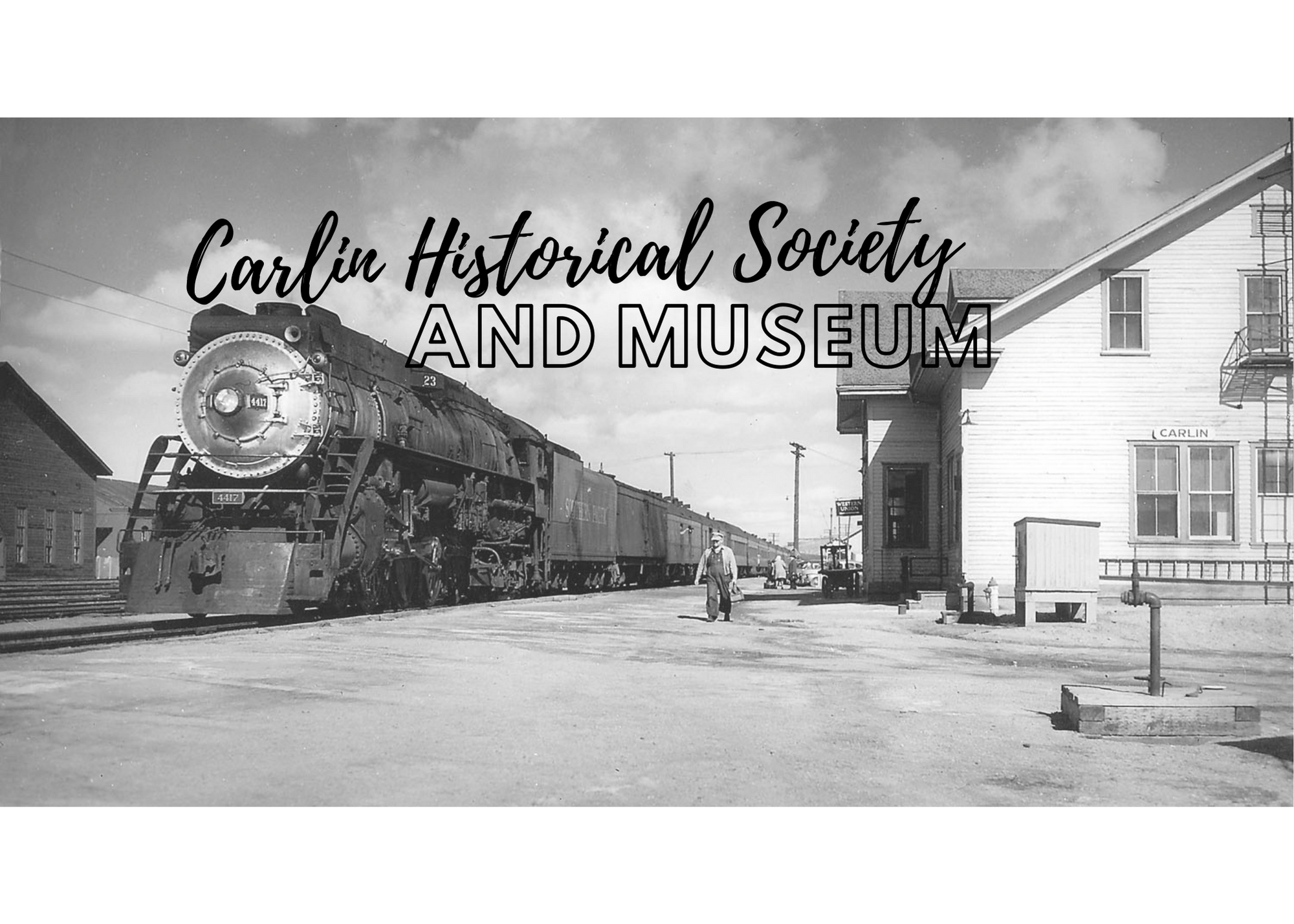

The Carlin Historical Society was founded in March 2018 when a small group of local citizens began meeting to plan for Carlin’s Sesquicentennial Celebration. The group soon realized that they were very interested in the history of Carlin, Nevada and the surrounding area. They immediately began making plans to write bylaws and register for non-profit status at the state and federal level.
Visiting the Carlin Historical Society and Museum
We are open on Thursday and Saturday from 10:00 a.m. to 12:00 p.m. We are also open on Friday from 1 p.m. to 3 p.m. You can also make an appointment to visit the museum by contacting us beforehand. Please call 775-389-3220 to schedule. We require at least 72 hour notice for appointments.

The Carlin Historical Society’s mission is to discover, collect, preserve, research, interpret, disseminate, display, and promote the history of Carlin, Nevada and surrounding areas.
How we plan to accomplish our mission:
On July 4, 2018, we opened our first exhibit in a room that was loaned to us by the City of Carlin in the Carlin Library. The exhibit was a celebration of 150 years of Carlin’s history.

In March of 2019, the Carlin Historical Society finalized an agreement with the City of Carlin to lease a historic schoolhouse building for use as a museum.
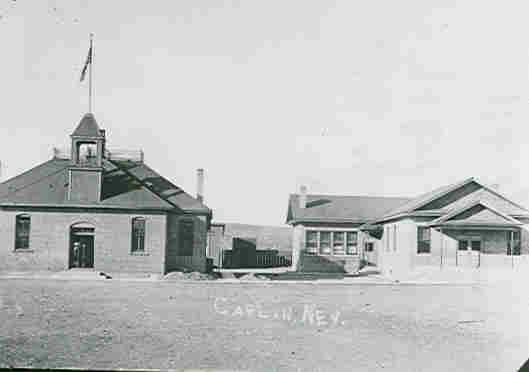
The building that houses the Carlin Museum was possibly constructed as early as 1870 as a two room schoolhouse. In 1926, a larger school was built one block north. The building was then used as Town Hall and also a meeting room for the local American Legion. In the 1950s, it was again used as a school for the first kindergarten classes in Carlin. Afterwards it was used for various community activities such as a karate class. In 1980, renovations on the building began so it could be used as a Senior Citizens Center. It housed the Carlin Open Door Senior Citizen Center until 2002 when a new facility was built. Until the Carlin Historical Society claimed it as a museum it was used solely for storage. The Carlin Historical Society plans to restore the building to its original state as much as possible.

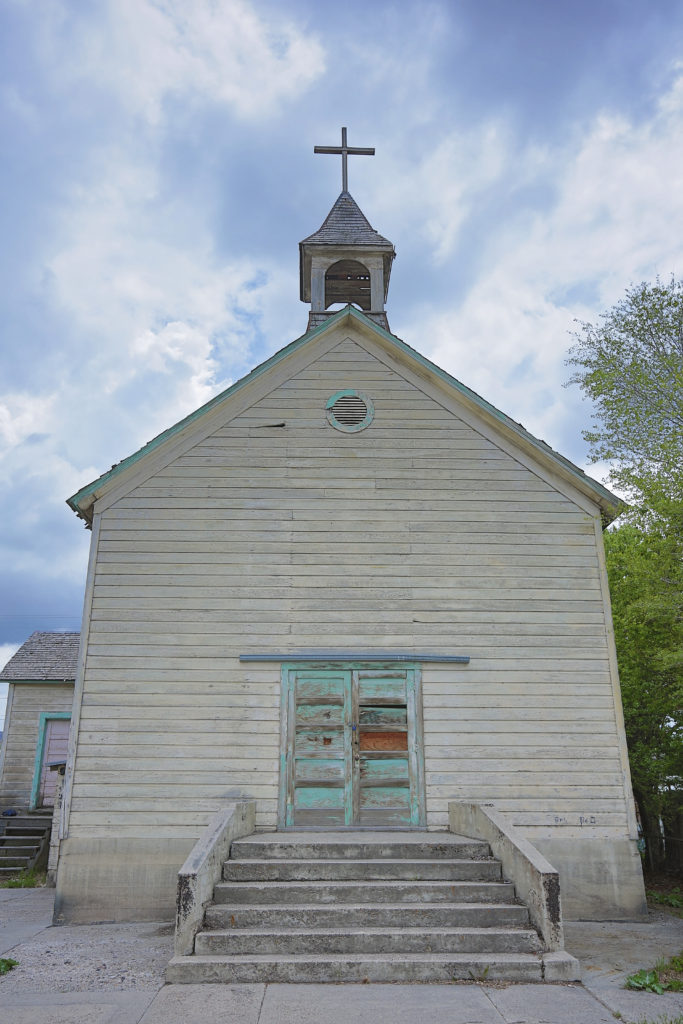
In May of 2019, the City of Carlin acquired the old Catholic Church on Main Street in Carlin. The Carlin Historical Society hopes to partner with the City to help restore this beloved historical structure.
In April of 2021, the Carlin Historical Society officially took over the Old Catholic Church Restoration Project. The Carlin Historical Society is currently developing plans to prevent further degradation of the building and long-term plans for restoration.
The preservation and restoration of the Old Church on Main is an ongoing project. The Carlin Historical Society has received grant funding from the State Historic Preservation Office of Nevada to commission a Historic Structure Report which as of January 2025 is pending review. The next step includes the development of architectural plans to shore up the structure and prevent further damage from the elements.
How Can You Help?
We need volunteers, monetary donations, and artifacts to display in our museum. Please email us at carlinhistoricalsociety@gmail.com
Contact Us
Have some Carlin History to Share?
Please contact us if you have something to share about the history of Carlin or the surrounding areas. We would love to see your pictures, hear your stories, or just talk about Carlin.
P.O. Box 14, Carlin, NV 89822
Phone: 775-389-3220
Email: carlinhistoricalsociety@gmail.com
Web: www.carlinhistoricalsociety.com
We are a registered 501(c)3 non-profit organization.