Post 5: 8th & Main
Saloons, Jails, & Lawmen
Carlin’s Main Street was, for a long time, a bustling thoroughfare. The railroad’s freight house sat right in the middle of the street, and many of Carlin’s most prosperous businesses looked out upon the railyard and its numerous trains.
Between railroad employees, passengers, and miners coming and going from nearby claims, establishments where one could “wet your whistle” were abundant. The earliest watering holes were likely canvas tents, but as the town grew, more permanent structures were constructed.
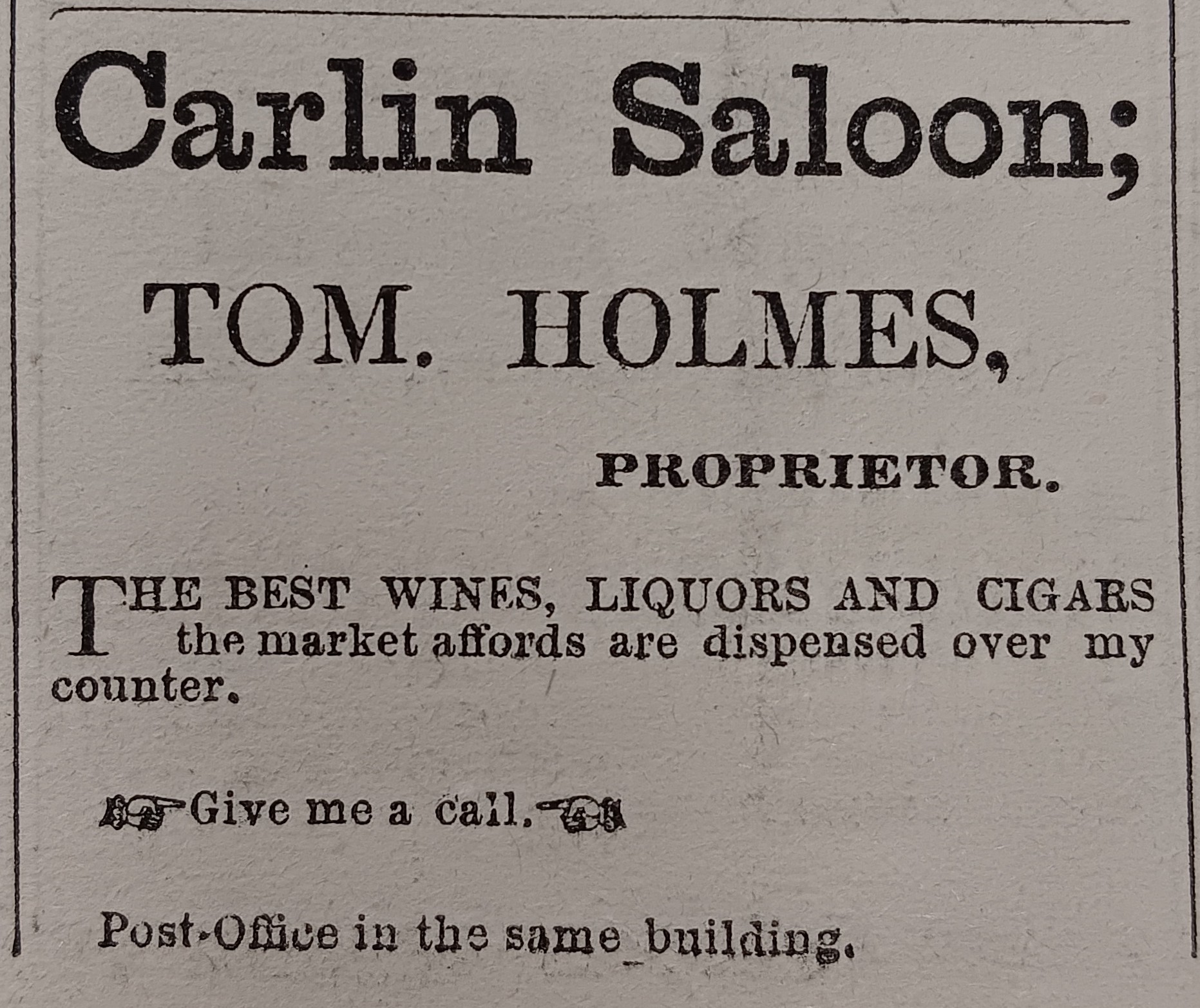
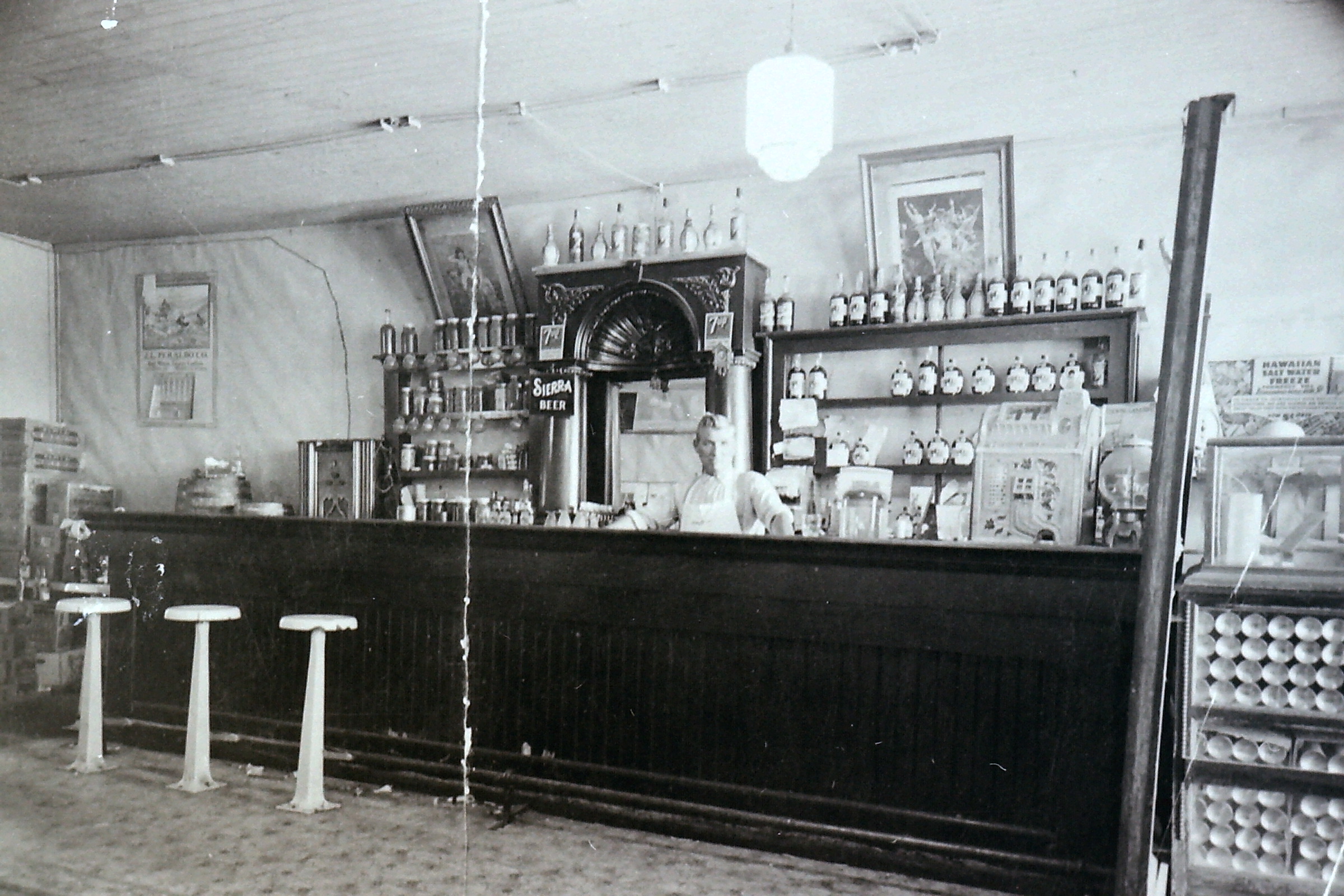
At one point, it is believed Carlin hosted at least sixteen saloons simultaneously. Newspapers document that in 1902, at least eleven saloons opened within a single month to accommodate a new gold discovery north of Carlin.
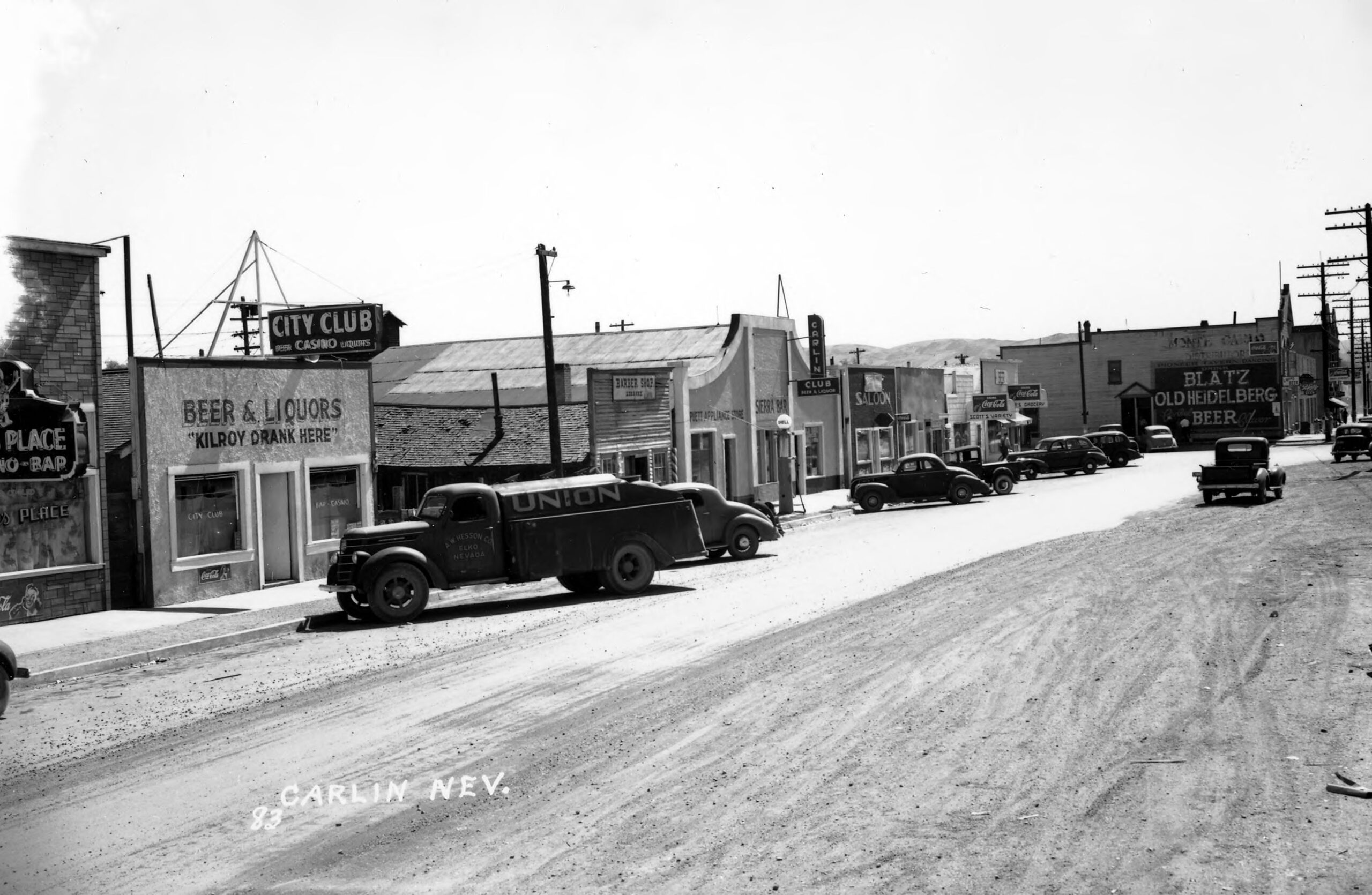
The block between 7th and 8th Streets on Main Street has long been home to a number of bars. Some, like the Red Rooster, are gone, but one remains—the City Club. Next door was Doc’s Place.
One of the most well-known stories about Carlin’s bars comes from World War II. As troop trains passed through town, young soldiers would rush into local watering holes. The situation became so prevalent that a local ordinance was enacted requiring all Carlin bars to close whenever a troop train stopped. The railroad dispatcher would signal with a whistle to alert the bartenders to lock their doors. Local children would earn money by running to the store to buy candy bars and other snacks for soldiers leaning out of train windows.
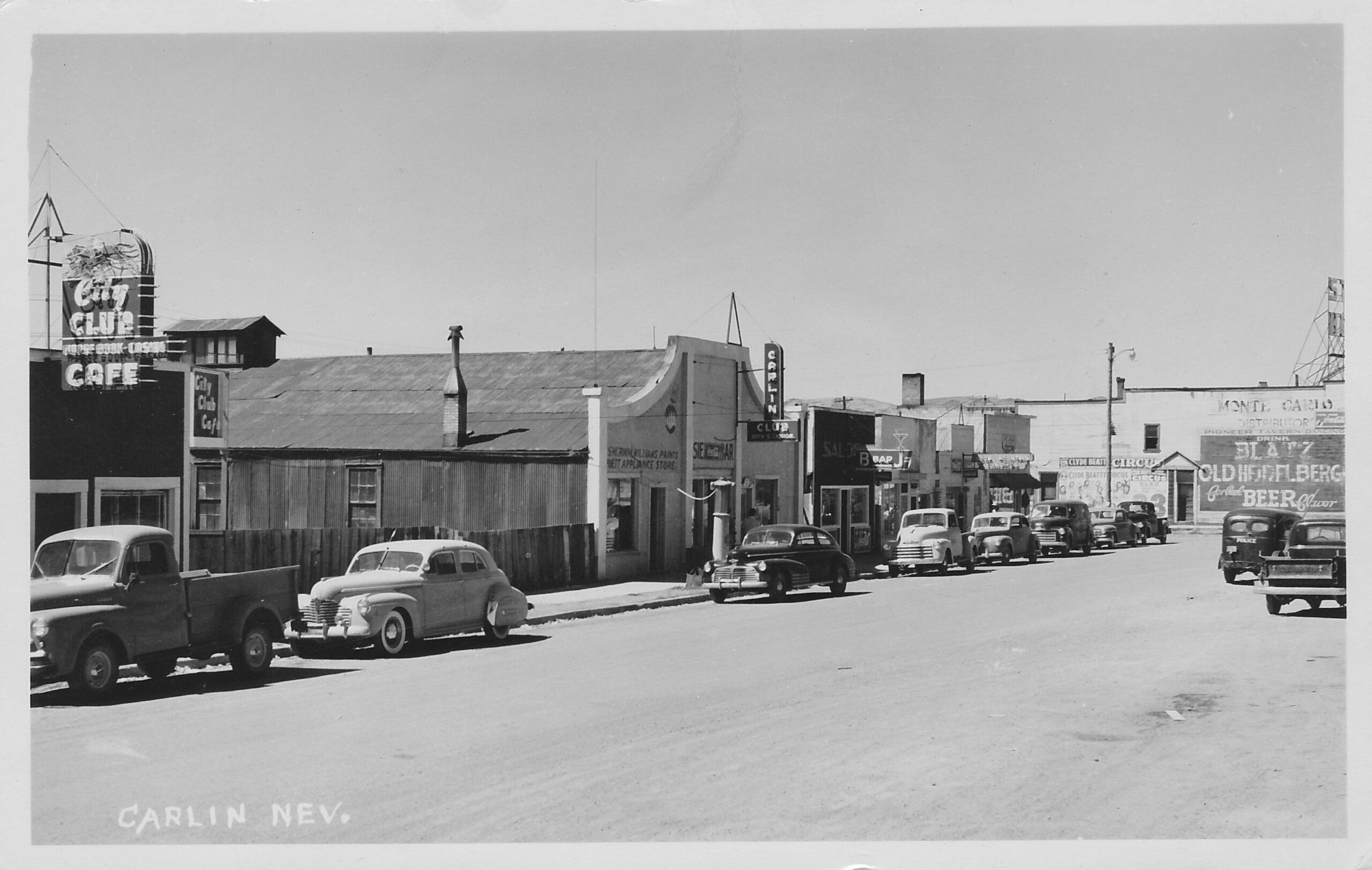
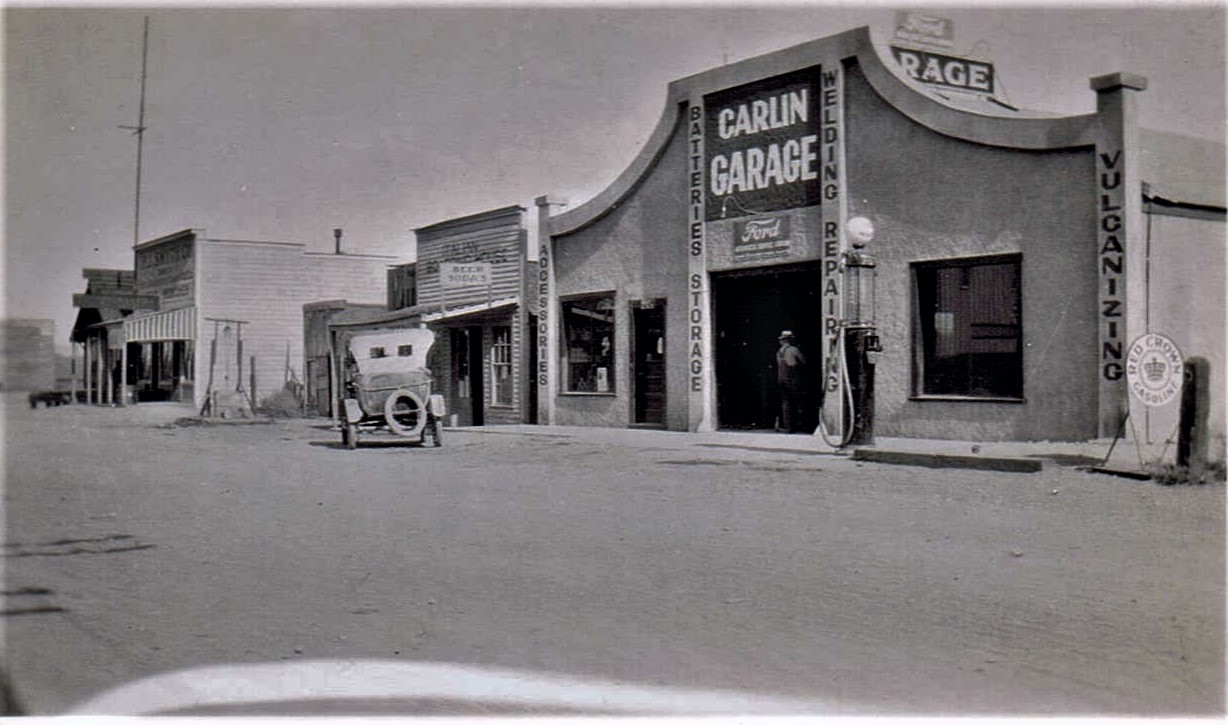
The rock-covered building on this block was originally the Carlin Garage. By the 1950s, it had been converted into a restaurant and bar called the Rock Inn. More recently, it served as a private residence, but it is now vacant.
Carlin Jail
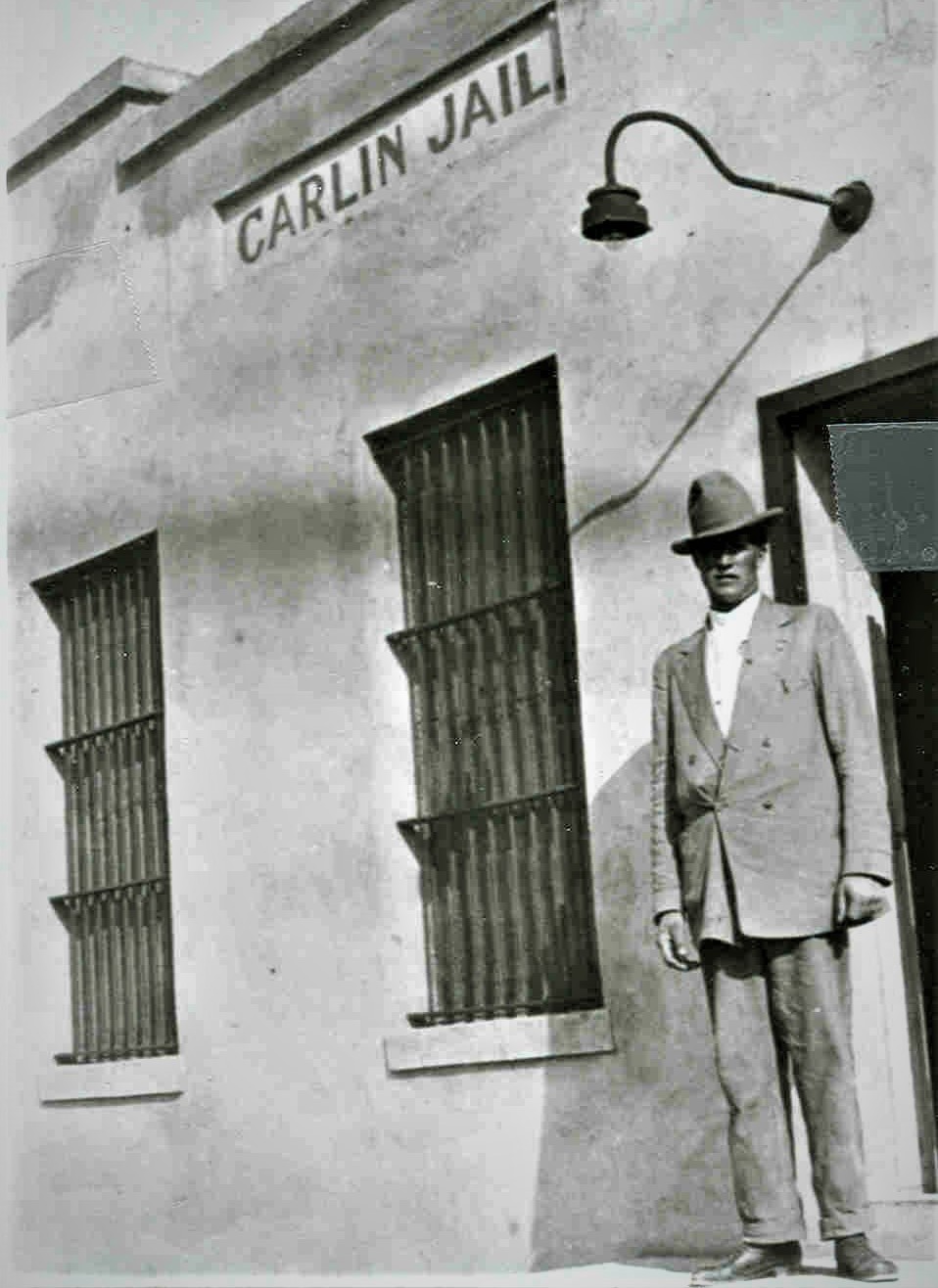
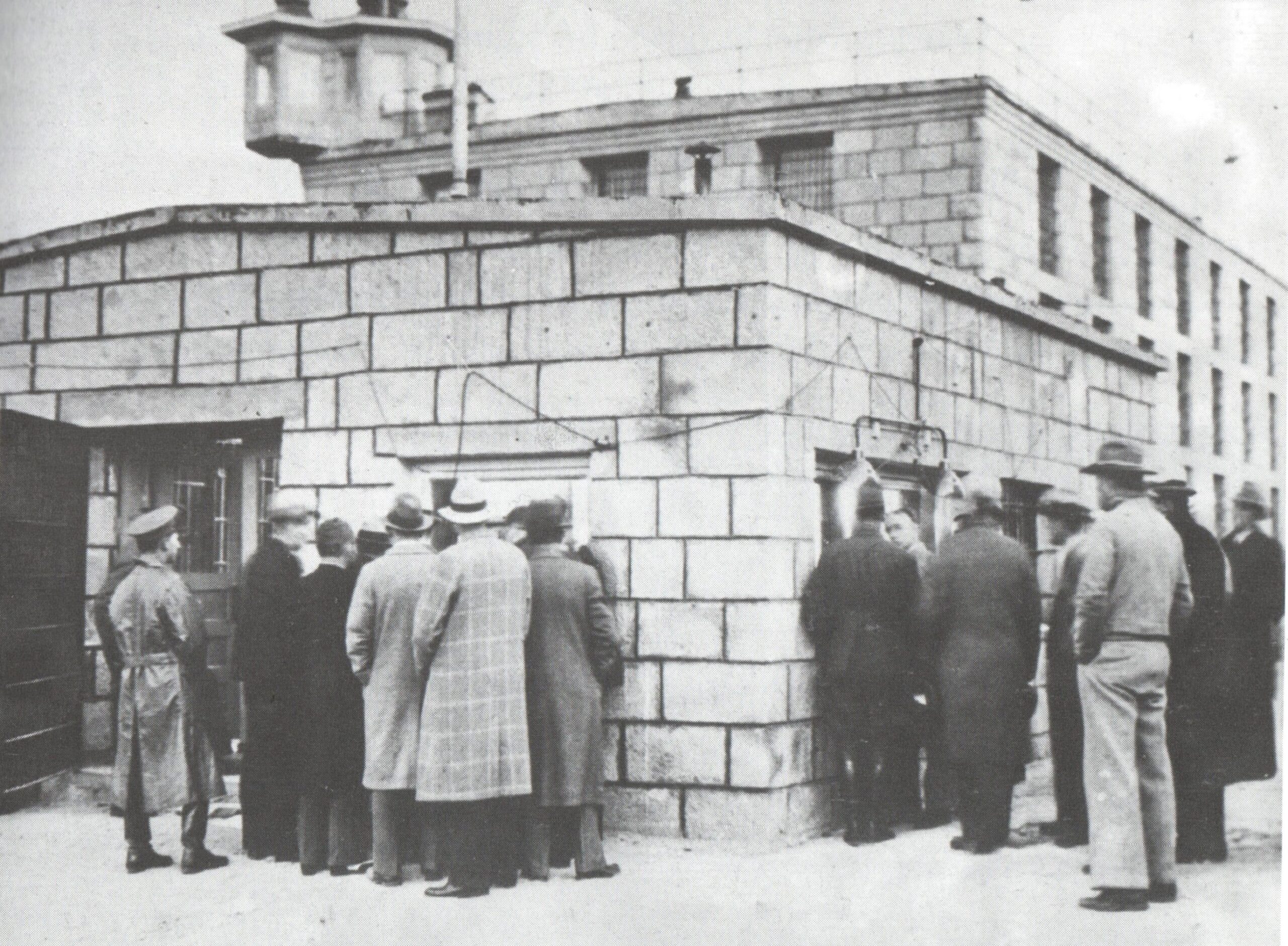
Just half a block from Main Street to the south sat Carlin’s jail, ready for when drinking got out of hand. The jail was established in August 1869, when the county allocated $250 to build a “prison” in Carlin.
Repairs were made in 1897, 1904, 1912, and 1914. Sometimes these were necessary due to the ambitious—and occasionally easy—escapes of inmates. In 1895, the Elko Independent reported that two youthful hoboes, given “free lodgings” in the Carlin Jail, had not been residents for long before kicking a hole through the wall and escaping. Evidently, the original structure was less secure than one might hope for a jail.
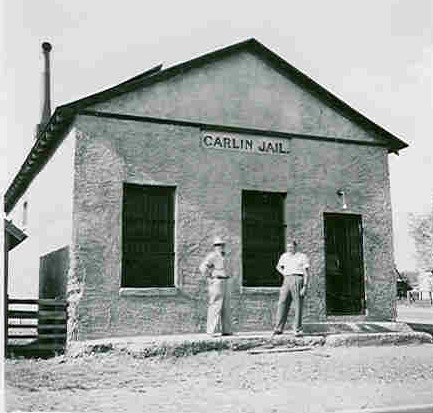
By 1914, residents were frustrated. In October, the Elko Daily Independent reported “some dissatisfaction among the people of that place over the matter of working hoboes and petty offenders caught there on the streets,” noting the lack of “any suitable place to house the prisoners.” In response, a new jail was built in 1915. This cement building featured a steel cell, indoor plumbing, and electric lighting, and it served as a model for a new jail in Montello, Nevada. The county paid the Southern Pacific Railroad Company for water and electricity.
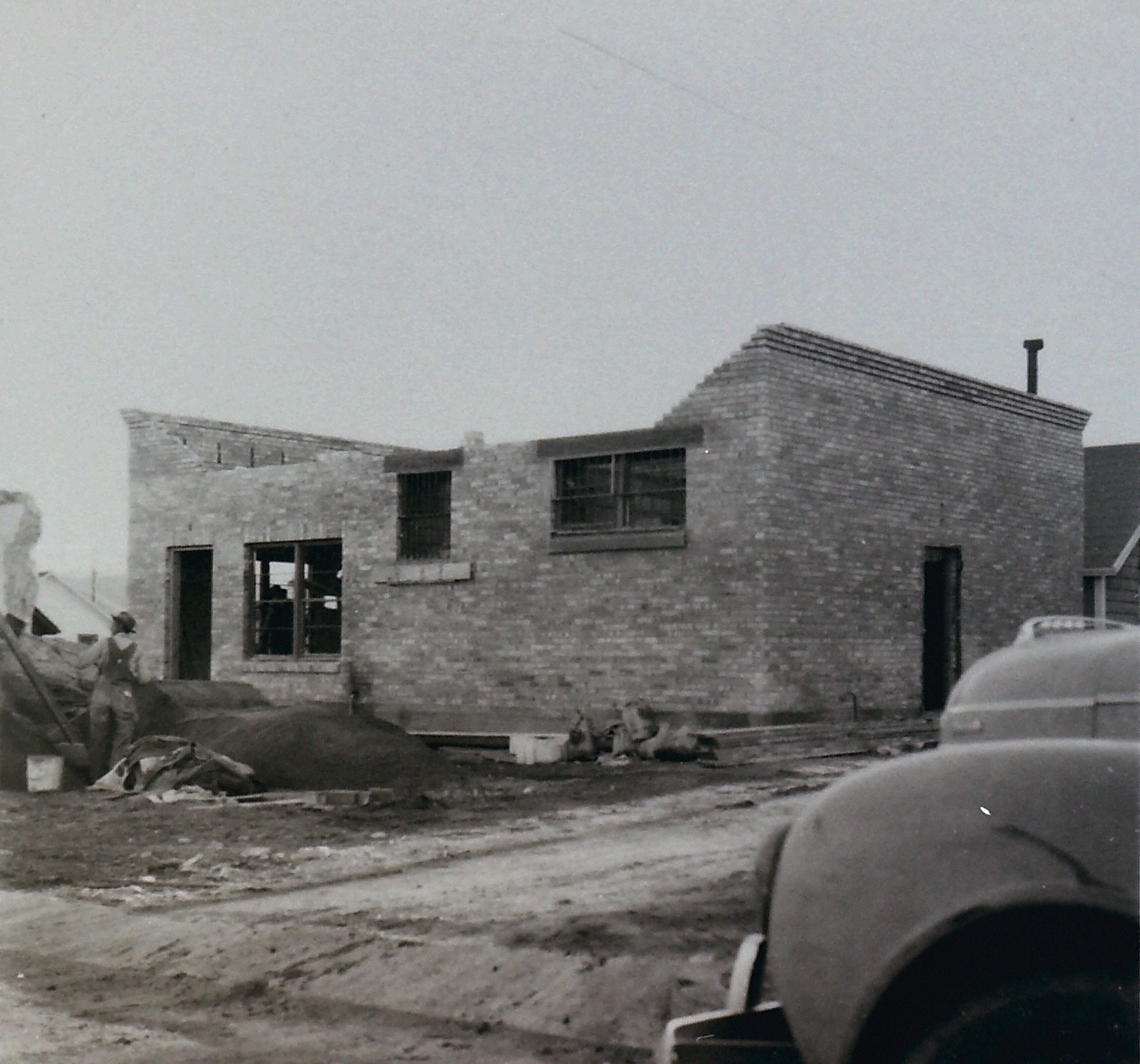
By 1945, even a steel cell proved insufficient for some of Carlin’s more determined lawbreakers. A new brick jailhouse was constructed, which also served as Carlin’s Justice Court until 1956.
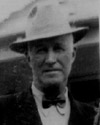
Carlin’s Constable
Constable Dolph Berning moved to Carlin in 1905 to work for the railroad. After his election in 1916, he served as Carlin’s constable until his death in 1942. His role as the town’s peacekeeper kept him busy, and by all accounts, he was highly effective. He regularly apprehended criminals who had eluded law enforcement in nearby communities.
Berning was also active in the community during World War II, serving on the Elko County Defense Council as both police and air raid warden. In the 1930s, he helped organize and oversee local Conservation Corps projects.
His death came at the hands of two young men who had escaped a reform school in Indiana and were traveling west, committing crimes along the way. Such incidents were not uncommon; just a few years earlier, Berning had arrested three young men from Cincinnati who had stolen a car while en route to San Francisco.
In 1942, the youth he attempted to apprehend near Emigrant Pass outside Carlin were armed and fatally shot him.
The two assailants, both 15 years old, were Floyd Loveless and Dale Cline. They had escaped from an Indiana reformatory in a stolen car. In Elko, the two argued, and Loveless stole a truck for his own use, with Cline following in the car. Upon learning of the truck theft, word was sent to Constable Berning to intercept the vehicle.
Berning successfully pulled over the truck, but when he tried to physically remove Loveless, Loveless shot him. Berning fell forward into the truck; Loveless fired again and then drove off. He soon stopped, and Cline encouraged him to abandon the truck. The two left Berning in the vehicle. He was found shortly afterward by other law enforcement officers and taken to the hospital in Elko, where he succumbed to his wounds. A funeral for Berning was held a few days later in the “flower-banked auditorium of Carlin High School.”
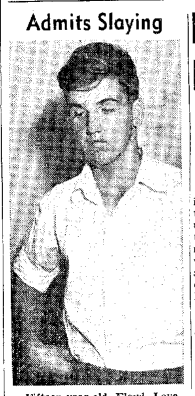
Floyd Loveless was charged with Berning’s murder. He initially pled not guilty but admitted to the killing on the stand during his trial, hoping to avoid the death penalty. At the time, he was only 16 years old. The jury found him guilty of murder, and under Nevada law, the judge was required to sentence him to death, though the Board of Pardons or the governor could commute the sentence.
The case was appealed to the Nevada Supreme Court, which granted a stay of execution. Upon review, the court ordered a new trial, noting that the jury had failed to specify whether Loveless was guilty of first- or second-degree murder. The new trial began on November 16, 1943, and concluded on November 17. The jury found Loveless guilty of first-degree murder.
Loveless was committed to the Nevada State Prison to await execution in the gas chamber, unless granted clemency. His execution was scheduled for September 29, 1944. By that time, he was nearly 18 years old, making him the youngest person ever executed in Nevada.
The case became a national headline. People from across the state and country wrote to Loveless, the governor, and the prison warden, pleading for clemency—but the requests went unanswered.
In a chilling prelude to his fate, Constable Berning had previously arrested a man named Luther Jones for disturbing the peace in Carlin in 1936. Unknown to Berning at the time, Jones had brutally murdered four men just days earlier in Elko. When arrested, Jones oddly asked how criminals were executed in Nevada. Berning replied that executions were carried out by gas in Carson City.
Now let’s take a break from Main and head south along 8th to learn more about Carlin’s transformation in the 1920s.
Orientation Compass
Rotate your device to orient yourself with the markers.